-
Shop
- Advanced Technologies
- AI Skills Mastery 2026 Collection
- Apple Accessories
- Bathroom
- Car Accessories
- Dating & Social Skills
- Digital Resources
- AI & Technology
- Beauty
- Budgeting & Saving
- Car Buying & Ownership
- Cozy Feast Collection
- Electronics & Technology
- Entrepreneurship & Business Growth
- Financial Education
- Financial Independence
- Financial Mindset & Psychology
- Goal Setting
- Home Styling & Organization
- Kitchen & Recipes
- Leadership
- Mindfulness
- Mindset
- Online Business
- Parenting & Child Development
- Personal Style & Fashion
- Pet Lifestyle & Wellness
- Positive Thinking
- Sleep Improvement
- Smart Life with AI
- Stress Management & Relaxation
- Travel Planning
- Wellness
- Yoga & Fitness
- Yoga & Mind-Body Practices
- Education & Learning
- Family & Parenting
- Fashion
- Accessories
- Alexander McQueen
- Bags
- Bags & Wallets
- Balenciaga
- Belts
- Blazers
- Bottega Veneta
- Bottoms
- Brunello Cucinelli
- Burberry
- Chanel
- Chloé
- Clothing
- Dior
- Dolce & Gabbana
- Dresses
- Etro
- Fendi
- Gucci
- Hats & Hair Accessories
- Hoodies & Sweatshirts
- Jacquemus
- Jewelry
- Jil Sander
- Keychains
- Kiton
- Luggage
- Miu Miu
- Off-White
- Outerwear
- Prada
- Rick Owens
- Saint Laurent
- Scarves
- Socks & Tights
- Sweaters & Cardigans
- The Row
- Tom Ford
- Tops & Shirts
- Valentino
- Valentino Garavani
- Versace
- Vivienne Westwood
- Watches
- Fashion Accessories
- Furniture
- Gadgets
- Health & Beauty
- Health & Wellness
- Home & Garden
- Home Electronics
- Home Supplies
- Kids & Babies
- Kitchen
- Lighting
- Patio, Lawn & Garden
- Personal Growth
- Pet Care
- Pet Supplies
- Pets
- Shoes
- Sport & Outdoors
- Super Deals
- Travel
- Wealth
- Popular
- Best deals
Pet Car Travel Safety: Seatbelts, Carriers & Checklist
Pet Travel Safety 101: Car Seat Rules, Seatbelts, Carriers, and a Ready-to-Go Checklist
Safer pet car travel comes down to three things: the right restraint for the animal’s size and temperament, correct placement in the vehicle, and a repeatable routine before every drive. This guide breaks down practical car seat and carrier rules for dogs and cats, common mistakes to avoid, and a printable-style checklist that makes trips smoother—whether it’s a five-minute errand or a full-day road trip.
What “safe” looks like for pets in a moving car
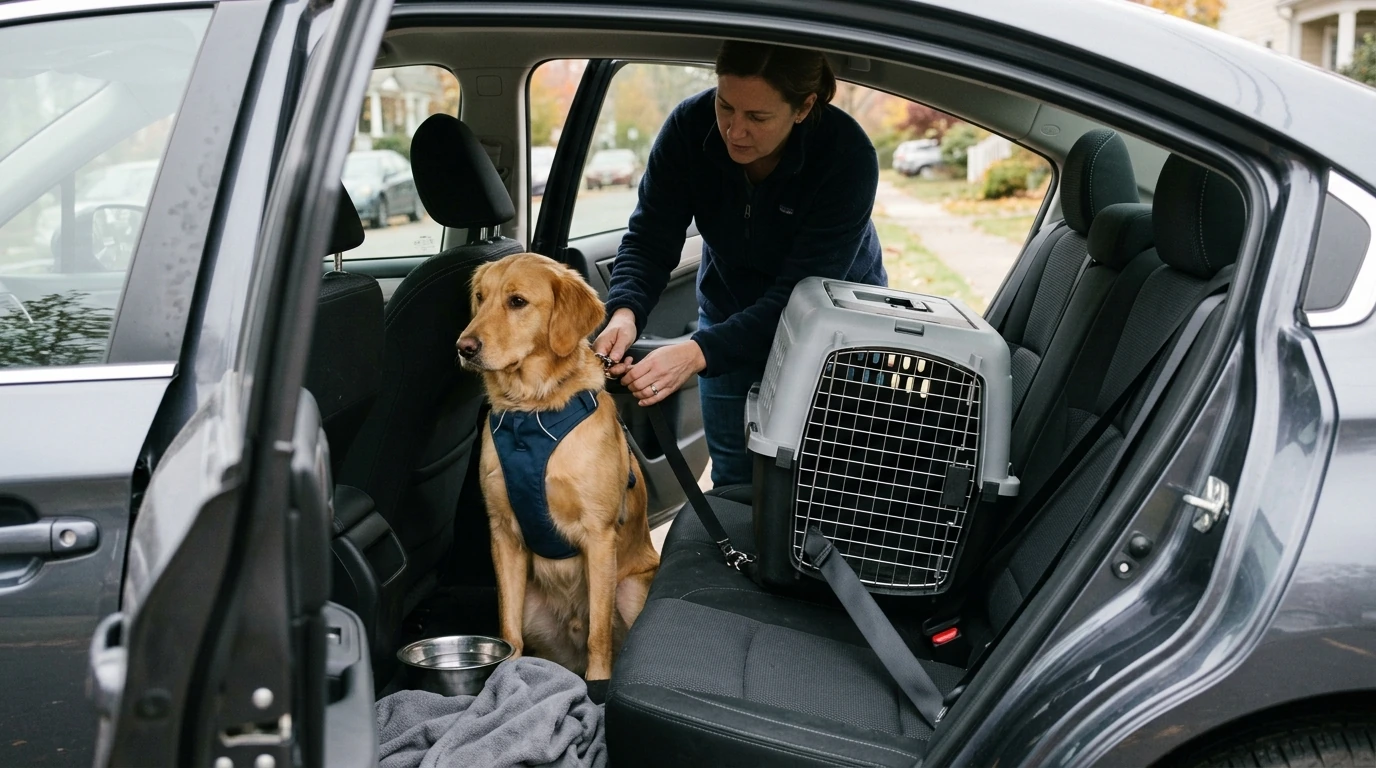
A “safe” setup keeps your pet from becoming a projectile, keeps you focused on the road, and makes transitions (loading, stops, unloading) predictable. The core goals are simple: restraint that stays put, a spot that’s away from airbags and the driver, and a routine your pet recognizes.
- Keep pets restrained: A crash, hard brake, or sharp turn can turn an unrestrained pet into a projectile and increase injury risk for everyone in the vehicle.
- Prevent driver distraction: Roaming, climbing into the front seat, or hanging out of windows increases hazard and can trigger sudden maneuvers.
- Choose restraint type by pet and trip length: Harness + seatbelt tether, secured carrier/crate, or a crash-tested travel crate depending on size, behavior, and motion sensitivity.
- Aim for consistent setup: Using the same location and restraint method each ride can reduce anxiety and improve compliance over time.
- Plan for stops: The restraint should allow safe exits at rest stops without a scramble (leash clipped before opening doors, carrier latched, doors closed).
For additional baseline guidance, see the American Veterinary Medical Association (AVMA) pet travel tips and the NHTSA guidance on distraction.
Car seat and carrier placement rules that reduce risk
Where the restraint sits matters almost as much as what you use. Placement that limits airbag exposure and keeps the pet away from the driver reduces risk in everyday driving—well before any emergency happens.
- Back seat is the default: Placing pets in the rear reduces interaction with the driver and limits risk from front airbags.
- Avoid front passenger seat for small pets: Airbags can seriously injure animals even in low-speed collisions. If front seat use is unavoidable, follow your vehicle manual guidance and only disable airbags where legally and mechanically appropriate.
- Secure the restraint to the vehicle: Carriers should be anchored with the seatbelt (or a LATCH-compatible method if the product supports it). Never rely on friction alone.
- Prevent “submarining” and tipping: Choose carriers/crates with flat bases and secure them so they don’t slide into footwells or tip during turns.
- Keep the head inside the vehicle: Window riding increases risk of eye injury, debris impact, and falls; use window locks and keep the pet restrained away from open windows.
Seatbelt tethers and harnesses: practical rules and common mistakes
Harness-and-tether setups are popular because they’re quick for short trips and help keep dogs from climbing into the front seat. The difference between “restrained” and “protected,” though, comes down to details: attachment point, slack, and hardware condition.
- Attach tethers to a harness, not a collar: Collar attachments can cause neck injury in sudden stops.
- Keep slack short: Allow sitting/lying comfort without permitting the pet to reach the driver, climb into the front seat, or jump out when a door opens.
- Use strong connection points: Clip to the harness back ring designed for restraint; avoid weak rings intended only for ID tags.
- Check hardware every trip: Look for fraying, cracked buckles, bent clips, and worn stitching—replace before it fails.
- Avoid improvising with bungee cords: Elastic tethers can increase rebound forces; use purpose-built tethers with clear weight ranges and installation instructions.
If you want to compare safety features across restraint types, crash-testing research and selection criteria from the Center for Pet Safety is a helpful reference point.
Carriers and travel crates for dogs and cats: setup that stays secure
The 3-minute pre-drive checklist (and a quick rule-of-thumb for stops)
Pet car travel safety checklist by stage
| When | Do this | Why it matters |
|---|---|---|
| Before starting the car | Harness/collar on, ID tag visible; leash within reach; carrier latched; seatbelt tether clipped to harness | Prevents escapes and reduces setup errors under time pressure |
| Before driving away | Carrier/crate secured with seatbelt; tether length checked; windows locked/limited | Reduces sliding/tipping and keeps pet away from windows and driver |
| During the drive | No feeding in moving car (unless veterinarian-advised); monitor airflow; keep cabin comfortable | Helps reduce nausea, stress, and overheating |
| At stops | Leash clipped before opening doors; quick paw-and-nose check for heat/cold; offer water | Prevents bolt-outs and catches discomfort early |
| After arrival | Unload pet first in a controlled area; confirm doors closed; do a quick gear inspection | Prevents parking-lot escapes and keeps equipment ready for next trip |
Digital checklist routines that make every trip easier
Instant-download guide: printable rules + checkboxes for dog and cat car travel
For a ready-to-use version of the rules and a repeatable checklist, the Pet Travel Safety 101: Car Seat Rules Checklist (instant download) puts the essentials in one place—helpful when you’re juggling keys, bags, and an eager pet at the door.
For a small comfort upgrade that can make longer drives feel steadier in cold weather, consider the Leopard Plush Steering Wheel Cover – Soft Non-Slip Winter Grip 15 in to improve grip and reduce hand fatigue during frequent stops and starts.
FAQ
What is the 7-second rule for dogs?
It’s a quick safety habit during transitions: pause for a brief count before opening the door (or right after clipping the leash) to confirm restraint, surroundings, and door control. It’s not a universal law, but it helps prevent bolt-outs and rushed mistakes.
Recommended for you
Validate Profitable Niches: 5-Step Workflow + Pack
Sep 11, 2026
Break the Bedtime Scroll: A Phone-Free Night Routine
Sep 11, 2026













Leave a comment