-
Shop
- Advanced Technologies
- AI Skills Mastery 2026 Collection
- Apple Accessories
- Bathroom
- Car Accessories
- Dating & Social Skills
- Digital Resources
- AI & Technology
- Beauty
- Budgeting & Saving
- Car Buying & Ownership
- Cozy Feast Collection
- Electronics & Technology
- Entrepreneurship & Business Growth
- Financial Education
- Financial Independence
- Financial Mindset & Psychology
- Goal Setting
- Home Styling & Organization
- Kitchen & Recipes
- Leadership
- Mindfulness
- Mindset
- Online Business
- Parenting & Child Development
- Personal Style & Fashion
- Pet Lifestyle & Wellness
- Positive Thinking
- Sleep Improvement
- Smart Life with AI
- Stress Management & Relaxation
- Travel Planning
- Wellness
- Yoga & Fitness
- Yoga & Mind-Body Practices
- Education & Learning
- Family & Parenting
- Fashion
- Accessories
- Alexander McQueen
- Bags
- Bags & Wallets
- Balenciaga
- Belts
- Blazers
- Bottega Veneta
- Bottoms
- Brunello Cucinelli
- Burberry
- Chanel
- Chloé
- Clothing
- Dior
- Dolce & Gabbana
- Dresses
- Etro
- Fendi
- Gucci
- Hats & Hair Accessories
- Hoodies & Sweatshirts
- Jacquemus
- Jewelry
- Jil Sander
- Keychains
- Kiton
- Luggage
- Miu Miu
- Off-White
- Outerwear
- Prada
- Rick Owens
- Saint Laurent
- Scarves
- Socks & Tights
- Sweaters & Cardigans
- The Row
- Tom Ford
- Tops & Shirts
- Valentino
- Valentino Garavani
- Versace
- Vivienne Westwood
- Watches
- Fashion Accessories
- Furniture
- Gadgets
- Health & Beauty
- Health & Wellness
- Home & Garden
- Home Electronics
- Home Supplies
- Kids & Babies
- Kitchen
- Lighting
- Patio, Lawn & Garden
- Personal Growth
- Pet Care
- Pet Supplies
- Pets
- Shoes
- Sport & Outdoors
- Super Deals
- Travel
- Wealth
- Popular
- Best deals
Break the Bedtime Scroll: A Phone-Free Night Routine
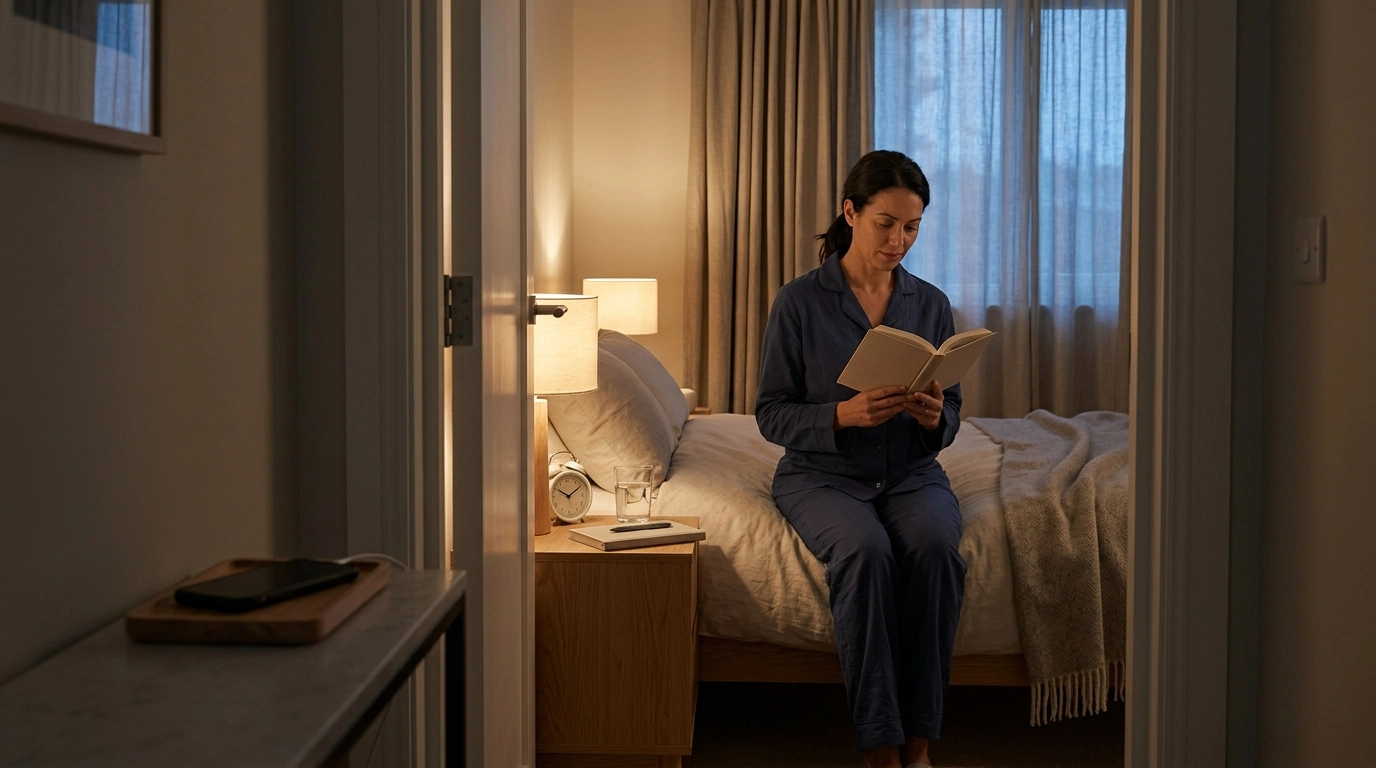
Lights Out, Phones Down: Essential Guide to Avoid Phone Temptation at Night
Nighttime phone scrolling often starts as “just one more check” and ends with lost sleep, restless mornings, and a harder time winding down the next night. A few practical changes—where the phone charges, how notifications behave, and what replaces the habit—can reduce temptation without relying on willpower alone.
The goal isn’t perfection. It’s creating a bedtime setup where the easiest choice is the one that supports sleep. Research on sleep hygiene consistently points to the same theme: less late-night stimulation and more consistent routines lead to better rest. For a deeper look at screens and sleep, see Sleep Foundation and the National Heart, Lung, and Blood Institute.
Why the phone feels irresistible at bedtime
- Variable rewards keep the brain hunting for the next update: messages, likes, headlines, short videos.
- Blue-enriched light and mental stimulation can delay sleepiness and make it harder to fall asleep.
- Cue-based habit loops form quickly: bed → phone → “one more” → bedtime drift.
- Stress and loneliness often spike at night; the phone becomes a familiar coping tool.
Once bedtime becomes associated with scrolling, the bed itself can trigger the urge. That’s why changing the environment (distance, settings, and replacement routines) works better than trying to “be stronger” at 11:30 p.m.
Set up a phone-free sleep environment in 10 minutes
- Move charging outside the bedroom or at least 6–10 feet from the bed to remove reach-based temptation.
- Use a real alarm clock (or a basic bedside clock) so the phone is not “needed” on the nightstand.
- Create one landing spot for the phone: a tray, drawer, or charging station in another room.
- Reserve the bed for sleep (and calm wind-down activities), not endless feeds.
If you want a simple step-by-step structure to follow, Lights Out, Phones Down: Essential Guide to Avoid Phone Temptation at Night is designed to help you set boundaries, reduce friction, and stick to a repeatable nighttime system.
Use settings to reduce urges without feeling cut off
- Schedule Do Not Disturb for your wind-down window and overnight; allow only true emergencies or key contacts.
- Turn off non-essential badges and lock-screen previews to reduce “open-loop” curiosity.
- Enable grayscale or reduce white point in the evening to make apps less stimulating.
- Add friction to distracting apps: move them off the home screen, log out, or use an app blocker during set hours.
- Set a nightly “shutdown ritual” reminder 30–60 minutes before your intended sleep time.
Quick changes that cut nighttime scrolling
| Change | Why it works | Try it tonight |
|---|---|---|
| Charge the phone outside the bedroom | Removes easy access and breaks the bed→scroll cue | Put a charger in the hallway or kitchen |
| Do Not Disturb on a schedule | Stops notification spikes that restart scrolling | Allow calls from favorites only |
| Hide social apps | Adds friction so opening them is a choice, not reflex | Move to a folder on the last screen |
| Grayscale after 9–10 p.m. | Makes content less visually rewarding | Use an accessibility shortcut toggle |
| Lock-screen silence | Prevents “just checking” loops | Disable previews and badges |
Replace scrolling with a short wind-down routine that actually sticks
- Keep it small: 10–20 minutes is enough to cue the body that sleep is next.
- Use a consistent sequence: dim lights → hygiene → calming activity → lights out.
- Swap the phone for a low-effort alternative: paper book, journaling, stretching, breathwork, or a calming playlist from a non-phone device.
- Handle racing thoughts with a quick “brain dump” on paper, then leave tomorrow’s tasks outside the bedroom.
- Pair the routine with a boundary: “Phone goes to the charging spot when pajamas go on.”
Consistency beats complexity. The best wind-down routine is the one you can do even on nights when motivation is low.
When willpower fails: friction tactics that prevent late-night relapse
If you’re also trying to reduce exposure-related worries, the FDA overview on evidence and practical guidance can be helpful: Cell Phone Radiation and Health (U.S. FDA).
For teens and families: agreements that reduce conflict and improve sleep
For families who want ready-to-use tools for stress, screen habits, and sleep routines, Teen Sleep Toolkit for Rest & Reset: 3-in-1 Bundle for Stress, Screen Time & Sleep Issues can help create clear expectations while keeping the focus on recovery and resilience.
A simple 7-night reset plan
Guided support for staying consistent
If your biggest challenge is “I know what to do, but I don’t stick with it,” a simple framework like Lights Out, Phones Down: Essential Guide to Avoid Phone Temptation at Night can help you turn good intentions into a nightly default.
FAQ
How to avoid radiation from cell phones at night?
Keep the phone away from the bed (not under your pillow), and charge it across the room or outside the bedroom when possible. If it must stay nearby, use airplane mode overnight and avoid streaming or active use; the biggest sleep benefit usually comes from reducing notifications and late-night scrolling.
What if the phone is needed as an alarm?
Use a dedicated alarm clock, or place your phone across the room so it can’t be reached from bed. Keep Do Not Disturb on overnight, set a single alarm, and avoid using the phone as a bedside clock to prevent “just checking” loops.














Leave a comment