-
Shop
- Advanced Technologies
- AI Skills Mastery 2026 Collection
- Apple Accessories
- Bathroom
- Car Accessories
- Dating & Social Skills
- Digital Resources
- AI & Technology
- Beauty
- Budgeting & Saving
- Car Buying & Ownership
- Cozy Feast Collection
- Electronics & Technology
- Entrepreneurship & Business Growth
- Financial Education
- Financial Independence
- Financial Mindset & Psychology
- Goal Setting
- Home Styling & Organization
- Kitchen & Recipes
- Leadership
- Mindfulness
- Mindset
- Online Business
- Parenting & Child Development
- Personal Style & Fashion
- Pet Lifestyle & Wellness
- Positive Thinking
- Sleep Improvement
- Smart Life with AI
- Stress Management & Relaxation
- Travel Planning
- Wellness
- Yoga & Fitness
- Yoga & Mind-Body Practices
- Education & Learning
- Family & Parenting
- Fashion
- Accessories
- Alexander McQueen
- Bags
- Bags & Wallets
- Balenciaga
- Belts
- Blazers
- Bottega Veneta
- Bottoms
- Brunello Cucinelli
- Burberry
- Chanel
- Chloé
- Clothing
- Dior
- Dolce & Gabbana
- Dresses
- Etro
- Fendi
- Gucci
- Hats & Hair Accessories
- Hoodies & Sweatshirts
- Jacquemus
- Jewelry
- Jil Sander
- Keychains
- Kiton
- Luggage
- Miu Miu
- Off-White
- Outerwear
- Prada
- Rick Owens
- Saint Laurent
- Scarves
- Socks & Tights
- Sweaters & Cardigans
- The Row
- Tom Ford
- Tops & Shirts
- Valentino
- Valentino Garavani
- Versace
- Vivienne Westwood
- Watches
- Fashion Accessories
- Furniture
- Gadgets
- Health & Beauty
- Health & Wellness
- Home & Garden
- Home Electronics
- Home Supplies
- Kids & Babies
- Kitchen
- Lighting
- Patio, Lawn & Garden
- Personal Growth
- Pet Care
- Pet Supplies
- Pets
- Shoes
- Sport & Outdoors
- Super Deals
- Travel
- Wealth
- Popular
- Best deals
Leopard Plush Steering Wheel Cover: Cozy 15″ Winter Grip
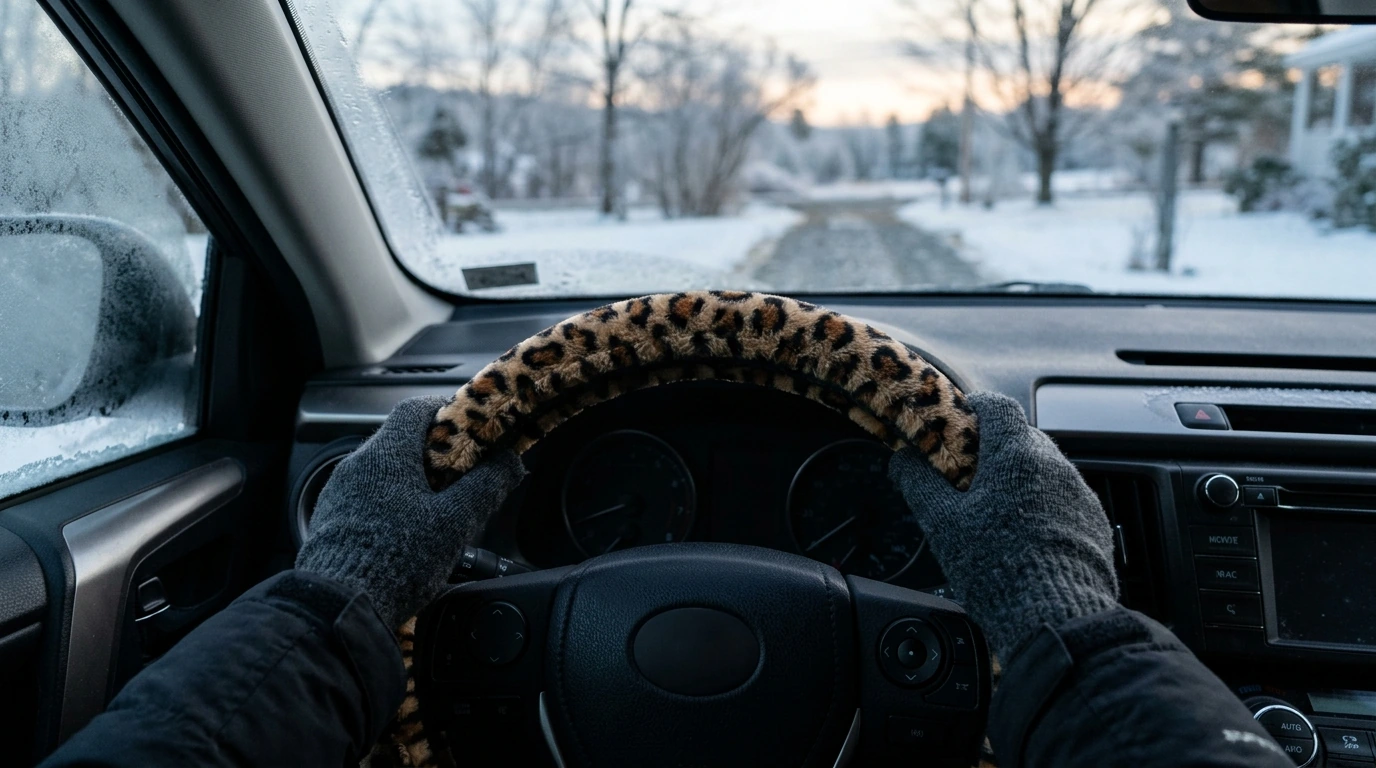
Leopard Plush Steering Wheel Cover – Soft Non-Slip Winter Grip for 15-Inch Wheels
A plush steering wheel cover can make cold-weather driving more comfortable by reducing the shock of an icy wheel, improving grip with gloves or dry hands, and adding a warmer, softer touch point for daily commutes. This guide breaks down fit, feel, traction, installation, and care for a leopard-pattern plush cover designed for 15-inch steering wheels.
What a plush winter steering wheel cover changes right away
The first cold start of the day is where a plush cover earns its keep. Instead of bare plastic or chilled leather, you get a noticeably warmer contact surface that helps your hands settle in faster—especially helpful when the cabin hasn’t warmed up yet.
- Warmer contact: Adds an insulating layer between hands and a cold wheel during winter starts.
- Softer feel: Plush texture can reduce discomfort on longer drives compared with bare, textured materials.
- Grip confidence: A non-slip inner layer helps the cover stay put during turns and quick maneuvers.
- Style upgrade: Leopard plush brings a bold interior look without permanent changes.
- Everyday comfort: A practical upgrade for early-morning commutes, school drop-offs, and errands in cold climates.
Fit and compatibility for a 15-inch steering wheel
Steering wheel covers are all about fit. A plush cover that’s the right diameter and stretched on evenly will feel secure and predictable; a loose one can twist, bunch, or creep—none of which belongs in a driver’s hands.
- Target size: Designed for steering wheels around 15 inches in diameter; measure before ordering.
- Snug fit matters: Tight fit helps prevent twisting, creeping, or bunching during steering input.
- Consider thickness: Plush adds diameter; many drivers like the more ergonomic handful, but some prefer a thinner wheel.
- Check clearance: Make sure the cover doesn’t interfere with steering wheel controls, spokes, or hand-over-hand technique.
Quick fit check before installing
| Check | How to measure/confirm | Why it matters |
|---|---|---|
| Wheel diameter | Measure straight across the wheel (outside edge to outside edge) | Ensures proper sizing and a secure fit |
| Wheel thickness | Note if the wheel is already thick (sport wheels often are) | Avoids an overly bulky grip |
| Control access | Look at button clusters and spoke areas | Prevents rubbing or blocking controls |
| Driving style | Test hand-over-hand steering with a thick winter glove | Confirms comfort and dexterity |
Non-slip feel and safer handling in winter conditions
Winter driving often means more frequent steering corrections—slick intersections, packed snow, wet leaves, and slushy ruts can all demand quick inputs. A cover with a non-slip backing is designed to resist rotation under torque, helping your hands stay aligned with the wheel.
- Stability under torque: Non-slip design helps the cover resist rotation when turning sharply or correcting on slick roads.
- Consistent hand placement: Plush texture can reduce micro-slips from dry winter skin or thin gloves.
- What to watch for: The cover should sit flat without wrinkles; bunching can reduce control and comfort.
- Safety check: After installation, do several full-lock turns while parked to confirm the cover doesn’t shift.
For broader winter safety habits—like adjusting speed early and increasing following distance—review practical guidance from AAA’s winter driving tips. Staying focused behind the wheel also matters year-round; NHTSA’s distracted driving resources are a useful refresher.
Comfort details: warmth, texture, and day-to-day usability
Plush covers are chosen for comfort, but comfort has a few layers: temperature, texture, and how the wheel feels after 20 minutes of steady driving. Leopard plush tends to feel soft with a slightly grippy nap, which many drivers prefer over slick finishes.
- Cold-start comfort: Plush reduces the initial chill compared with bare wheels.
- Grip texture: Soft, slightly grippy feel can be ideal for drivers who dislike smooth, slippery surfaces.
- Long-drive comfort: A softer contact point may reduce hand fatigue on highway stretches.
- Seasonal use: Popular in fall and winter; in very hot climates, plush can feel too warm after sun exposure.
Installation: getting a tight, even fit
A snug fit usually means a bit of effort during installation. Taking an extra minute to align and smooth the cover can prevent the most common annoyances—like a seam drifting off-center or a small ripple that you feel every time you turn.
- Warm it slightly: If the cover feels stiff, let it sit in a warm room (or warm car) to make stretching easier.
- Start at the top: Hook the cover over the top of the wheel first, then work down both sides evenly.
- Finish at the bottom: Stretch the final section into place and smooth around the full circumference.
- Final checks: Center seams, confirm uniform coverage, and do a steering test to ensure there’s no slip.
Cleaning and care for plush steering wheel covers
A practical pick for cozy commutes
Featured picks (in stock)
- Leopard Plush Steering Wheel Cover – Soft Non-Slip Winter Grip 15 in — a warm, soft, winter-friendly option sized for 15-inch wheels.
- Smooth Miles, Happy Backs, Real Comfort – The Ultimate Guide to Finding the Most Comfortable Car for Long Drives | Digital Download — helpful if long drives leave your hands, shoulders, or back feeling fatigued.
FAQ
What is the best steering wheel cover for cold weather?
Look for a cover that adds insulation (plush or fleece-like material), fits tightly to prevent shifting, and uses a non-slip inner layer. Confirm your wheel diameter (such as 15 inches) and do a parked steering test after installation to ensure it stays secure.
Will a plush steering wheel cover slip while driving?
A properly sized plush cover with a non-slip backing should stay in place. Slipping usually comes from the wrong size, uneven installation, or moisture—remove it, dry the surfaces, and reinstall evenly for a snug fit.













Leave a comment