-
Shop
- Advanced Technologies
- AI Skills Mastery 2026 Collection
- Apple Accessories
- Bathroom
- Car Accessories
- Dating & Social Skills
- Digital Resources
- AI & Technology
- Beauty
- Budgeting & Saving
- Car Buying & Ownership
- Cozy Feast Collection
- Electronics & Technology
- Entrepreneurship & Business Growth
- Financial Education
- Financial Independence
- Financial Mindset & Psychology
- Goal Setting
- Home Styling & Organization
- Kitchen & Recipes
- Leadership
- Mindfulness
- Mindset
- Online Business
- Parenting & Child Development
- Personal Style & Fashion
- Pet Lifestyle & Wellness
- Positive Thinking
- Sleep Improvement
- Smart Life with AI
- Stress Management & Relaxation
- Travel Planning
- Wellness
- Yoga & Fitness
- Yoga & Mind-Body Practices
- Education & Learning
- Family & Parenting
- Fashion
- Accessories
- Alexander McQueen
- Bags
- Bags & Wallets
- Balenciaga
- Belts
- Blazers
- Bottega Veneta
- Bottoms
- Brunello Cucinelli
- Burberry
- Chanel
- Chloé
- Clothing
- Dior
- Dolce & Gabbana
- Dresses
- Etro
- Fendi
- Gucci
- Hats & Hair Accessories
- Hoodies & Sweatshirts
- Jacquemus
- Jewelry
- Jil Sander
- Keychains
- Kiton
- Luggage
- Miu Miu
- Off-White
- Outerwear
- Prada
- Rick Owens
- Saint Laurent
- Scarves
- Socks & Tights
- Sweaters & Cardigans
- The Row
- Tom Ford
- Tops & Shirts
- Valentino
- Valentino Garavani
- Versace
- Vivienne Westwood
- Watches
- Fashion Accessories
- Furniture
- Gadgets
- Health & Beauty
- Health & Wellness
- Home & Garden
- Home Electronics
- Home Supplies
- Kids & Babies
- Kitchen
- Lighting
- Patio, Lawn & Garden
- Personal Growth
- Pet Care
- Pet Supplies
- Pets
- Shoes
- Sport & Outdoors
- Super Deals
- Travel
- Wealth
- Popular
- Best deals
Teen Sleep Reset Toolkit: Stress, Screens & Better Sleep
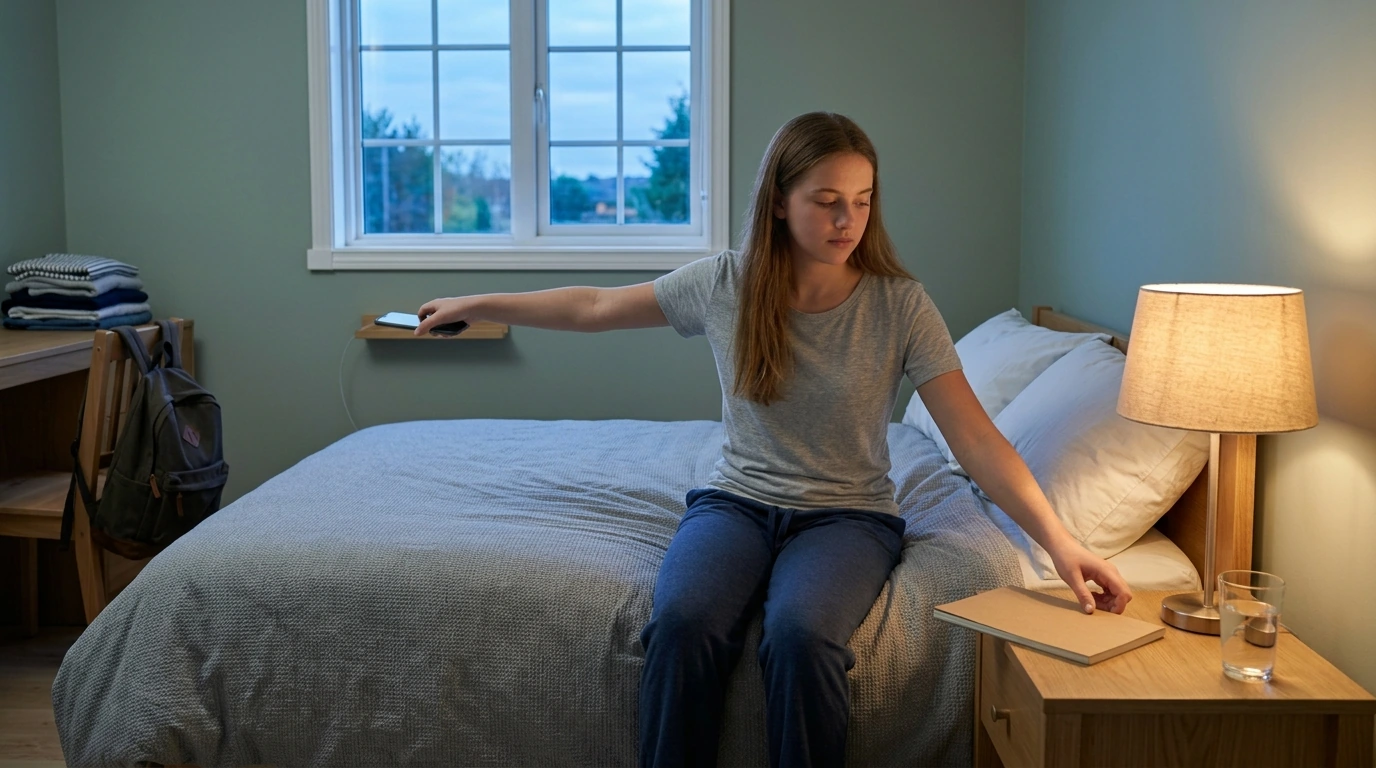
Teen Sleep Toolkit for Rest & Reset: A 3-in-1 Bundle to Unwind, Cut Screen Overload, and Sleep Better
Late-night scrolling, packed schedules, and stress can push bedtime later and make mornings harder. A practical sleep reset for teens works best when it combines calming routines, smarter screen habits, and simple tools that are easy to stick with—especially on school nights.
Why teen sleep gets thrown off (and why it’s not just “going to bed earlier”)
When sleep is messy, the advice often sounds simple: “Just get to bed earlier.” For many teens, it’s not that straightforward. Biology, stress, and modern habits pull bedtime later—and the consequences show up the next morning.
- Body clocks shift later in adolescence: Teens naturally feel sleepy later, even when they’re exhausted, which makes early bedtimes feel unnatural.
- Stress keeps the system “on”: Homework loads, sports, social dynamics, and performance pressure can keep the nervous system in alert mode.
- Screens crowd out wind-down time: Evening phone use often replaces calming routines and adds mental stimulation right before bed.
- Irregular schedules create social jet lag: Late weekends, naps, and variable homework can throw off the sleep-wake rhythm for days.
For additional guidance on healthy sleep basics and why consistency matters, the CDC’s sleep resources offer a helpful overview.
What’s inside the Teen Sleep Toolkit for Rest & Reset (3-in-1 bundle)
The Teen Sleep Toolkit for Rest & Reset: 3-in-1 Bundle for Stress, Screen Time & Sleep Issues is built around the three blockers that most often keep teens up: stress, screens, and inconsistent routines. It’s designed to be used together—calm the mind, set boundaries around devices, then follow a repeatable nightly plan.
It’s especially useful for teens who:
- Feel wired at night even when tired
- Struggle to fall asleep or wake up groggy
- Have bedtime phone habits that spiral into “one more”
- Sleep in late on weekends and can’t shift back for school
Bundle focus areas and what each part helps with
| Bundle focus | Primary goal | Best for | When to use |
|---|---|---|---|
| Stress downshift tools | Lower mental and physical arousal | Racing thoughts, tension, worry at bedtime | 30–60 minutes before bed |
| Screen-time reset supports | Reduce late-night stimulation and doomscrolling loops | Habitual phone use in bed, “just one more video” patterns | After dinner through bedtime |
| Sleep schedule reset plan | Rebuild consistent sleep and wake times | Late bedtimes, weekend drift, difficult school mornings | Daily for 2–3 weeks |
A simple “Rest & Reset” routine for school nights
A school-night routine works best when it’s short, repeatable, and realistic. The goal isn’t perfection—it’s giving your brain the same “closing time” cues each night.
- Choose a consistent weekday wake-up time: Protect it even after a rough night to help the body clock stabilize.
- Set a doable screen cutoff: Start with a small win (like 30 minutes earlier than usual) and gradually move it earlier.
- Use a quick wind-down sequence: Dim lights, prep for tomorrow, do one calming activity, then bed.
- Make the bedroom sleep-friendly: Cooler temp, low light, and ideally the phone charging outside the bed.
- If you’re not asleep after ~20 minutes: Get up for a quiet, low-light activity (no scrolling) until sleepy.
If you want an extra screen-free option that can replace late-night scrolling, a short, offline read can help some teens shift gears. A digital download like Smooth Miles, Happy Backs, Real Comfort – The Ultimate Guide to Finding the Most Comfortable Car for Long Drives can function as a “read-and-done” alternative to feeds—something finite that’s easy to stop.
Screen time that doesn’t sabotage sleep: practical boundaries that teens can actually follow
Going from “phone in bed every night” to “no phone ever” usually backfires. Boundaries that stick tend to use small changes plus a bit of friction.
- Add friction to break autopilot: App limits, grayscale mode, and scheduled downtime reduce impulsive checking.
- Separate relaxing from scrolling: Swap late-night feeds for audio, reading, journaling, stretching, or a warm shower.
- Protect the bed as a sleep cue: Avoid turning the bed into the default hangout for videos and messaging.
- Create a “last look” window: Pick a time earlier in the evening to check messages so bedtime doesn’t feel socially risky.
For family-friendly screen guidance and age-appropriate media habits, the American Academy of Pediatrics screen time resources are a strong reference point.
Stress, anxiety, and the wired-at-night feeling: calming strategies that fit teen life
If a teen consistently struggles with sleep, it may help to review teen-specific sleep norms and recommendations from the National Sleep Foundation’s teen sleep page.
What to expect in the first two weeks of a sleep reset
Who this bundle is for (and when a different approach may be needed)
The Teen Sleep Toolkit for Rest & Reset is a strong fit for teens dealing with stress-driven late nights, bedtime phone habits, and inconsistent schedules. It can also help families create shared expectations without nightly power struggles.
FAQ
What is the 3-6-9-12 rule for screen time?
The 3-6-9-12 rule is a simple family guideline: no screens before age 3, no game consoles before 6, no internet alone before 9, and social media around 12 (with supervision). For teens, the most sleep-friendly part is timing—keeping screens out of the last 30–60 minutes before bed and avoiding phone-in-bed habits.
What is the best way to reset my sleep schedule?
Pick a consistent wake-up time, then shift bedtime earlier gradually (about 15–30 minutes every few nights) while getting morning light exposure. Limit late naps and caffeine, and reduce screens before bed; most teens notice meaningful improvement within 1–2 weeks when the routine stays consistent.
















Leave a comment