-
Shop
- Advanced Technologies
- AI Skills Mastery 2026 Collection
- Apple Accessories
- Bathroom
- Car Accessories
- Dating & Social Skills
- Digital Resources
- AI & Technology
- Beauty
- Budgeting & Saving
- Car Buying & Ownership
- Cozy Feast Collection
- Electronics & Technology
- Entrepreneurship & Business Growth
- Financial Education
- Financial Independence
- Financial Mindset & Psychology
- Goal Setting
- Home Styling & Organization
- Kitchen & Recipes
- Leadership
- Mindfulness
- Mindset
- Online Business
- Parenting & Child Development
- Personal Style & Fashion
- Pet Lifestyle & Wellness
- Positive Thinking
- Sleep Improvement
- Smart Life with AI
- Stress Management & Relaxation
- Travel Planning
- Wellness
- Yoga & Fitness
- Yoga & Mind-Body Practices
- Education & Learning
- Family & Parenting
- Fashion
- Accessories
- Alexander McQueen
- Bags
- Bags & Wallets
- Balenciaga
- Belts
- Blazers
- Bottega Veneta
- Bottoms
- Brunello Cucinelli
- Burberry
- Chanel
- Chloé
- Clothing
- Dior
- Dolce & Gabbana
- Dresses
- Etro
- Fendi
- Gucci
- Hats & Hair Accessories
- Hoodies & Sweatshirts
- Jacquemus
- Jewelry
- Jil Sander
- Keychains
- Kiton
- Luggage
- Miu Miu
- Off-White
- Outerwear
- Prada
- Rick Owens
- Saint Laurent
- Scarves
- Socks & Tights
- Sweaters & Cardigans
- The Row
- Tom Ford
- Tops & Shirts
- Valentino
- Valentino Garavani
- Versace
- Vivienne Westwood
- Watches
- Fashion Accessories
- Furniture
- Gadgets
- Health & Beauty
- Health & Wellness
- Home & Garden
- Home Electronics
- Home Supplies
- Kids & Babies
- Kitchen
- Lighting
- Patio, Lawn & Garden
- Personal Growth
- Pet Care
- Pet Supplies
- Pets
- Shoes
- Sport & Outdoors
- Super Deals
- Travel
- Wealth
- Popular
- Best deals
Fix Spongy Brakes: Soft Pedal Causes, Tests & Safe Fixes
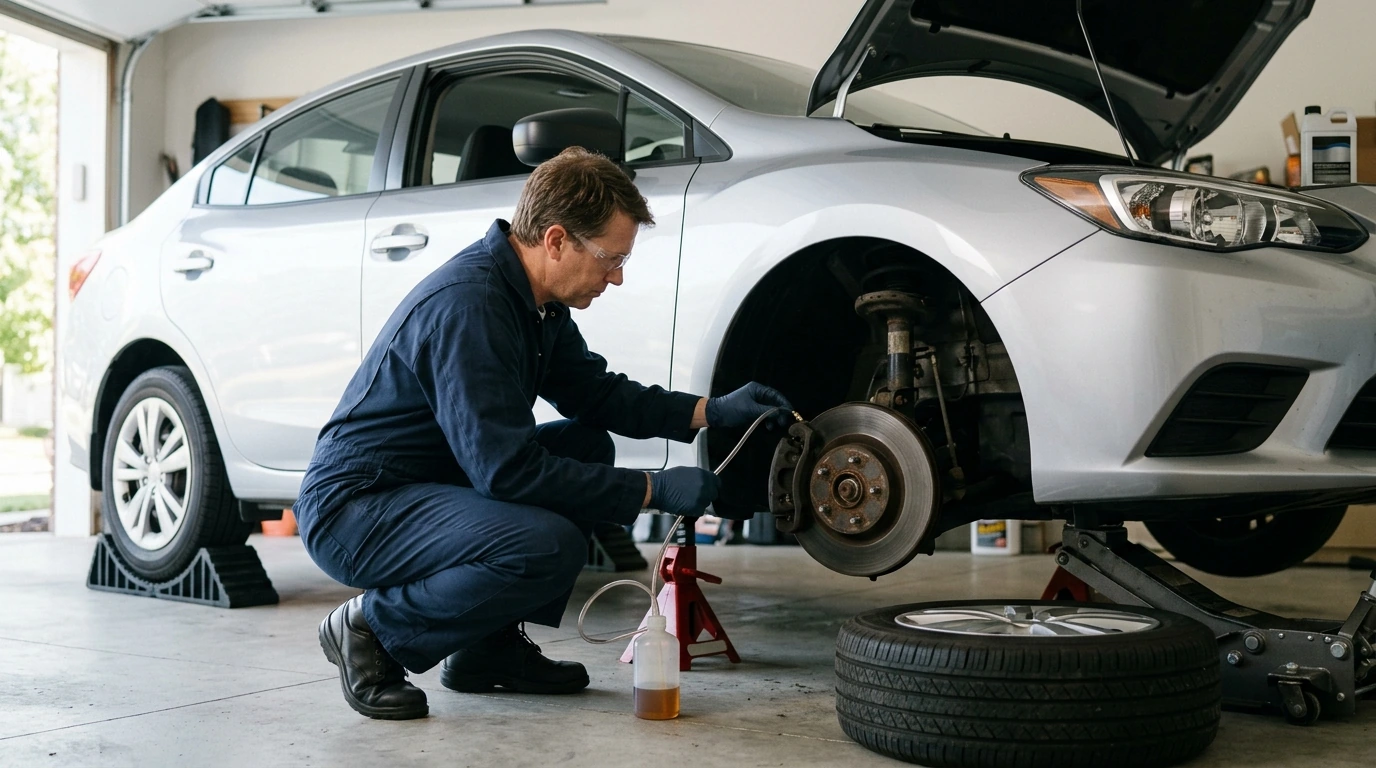
Stop Worrying About Spongy Brakes: Diagnose Soft Pedal Problems, Fix Them Safely, and Keep Them From Coming Back
A soft or spongy brake pedal usually means the hydraulic system is compressing something that shouldn’t compress—most often air, boiling fluid, or an internal leak. The result is a pedal that travels farther than expected and a car that takes longer to stop. Below are quick safety checks, the most common root causes, at-home diagnostics that narrow the problem fast, and proven fixes that restore a firm pedal and predictable braking.
What “Spongy” Feels Like (and Why It Matters)
A spongy pedal can show up in a few recognizable ways: the pedal sinks farther than normal, feels springy, needs pumping to build pressure, or slowly creeps down while you’re stopped at a light. In each case, hydraulic pressure isn’t translating efficiently into caliper or wheel-cylinder clamping force.
This matters because braking margin shrinks. Stopping distances can increase, and under heat (highway driving, long descents, towing), the risk of fade rises. One helpful clue is timing: sponginess right after brake service often points to trapped air or an installation issue, while sponginess that gradually develops more often points to fluid aging, a small leak, or component wear.
Immediate Safety Checks Before Troubleshooting
Don’t continue driving if the pedal goes near the floor, braking is inconsistent, or the brake warning light is on. Braking problems can escalate quickly, and a “barely okay” pedal can turn into “no pedal” with one more hard stop.
- Check brake fluid level at the master cylinder reservoir. If it’s low, inspect for leaks before topping off.
- Look for external leaks under the vehicle and behind each wheel. Brake fluid may look oily and can strip paint.
- Stationary hold test: with the engine on, press firmly and hold the pedal for 30–60 seconds. Note whether it stays firm or slowly sinks.
- If unsure, arrange a tow. A tow is cheaper than a collision.
For general brake safety guidance, see NHTSA’s brake safety information.
Fast Diagnosis: Match Symptoms to Likely Causes
The quickest way to narrow the cause is to match the symptom pattern: does it improve with pumping, sink under steady pressure, worsen when hot, or appear right after pad/rotor work? Prioritize high-risk possibilities first—external leaks, master-cylinder failure, and severely degraded fluid—then work down the list.
| Symptom | Most likely causes | Quick check | Common fix |
|---|---|---|---|
| Pedal feels spongy; improves after pumping | Air in lines, flexible hose swelling | Pump test; inspect rubber hoses for cracks/bulges | Bleed brakes; replace aged hoses if swelling |
| Pedal slowly sinks while holding pressure | Master cylinder internal seal bypass, ABS modulator issue, leak | Hold pedal 30–60 sec; check for external leaks | Replace master cylinder; scan/diagnose ABS if needed |
| Spongy after pad/rotor/caliper service | Air introduced, caliper installed on wrong side (bleeder not at top) | Confirm bleeder screw is at highest point; re-check torque | Correct caliper orientation; re-bleed in proper sequence |
| Pedal soft mostly after hard braking or downhill | Fluid boiling from moisture/overheating, old fluid | Smell/feel for fade; review last fluid change | Flush with correct DOT fluid; address heat causes |
| Soft pedal plus low reservoir level | External leak (lines, calipers, wheel cylinders) | Inspect wheels, line fittings, master cylinder rear seal | Repair leak; then bleed/flush |
| Pedal feels firm but stopping is weak | Glazed pads, contaminated friction, rotor issues, vacuum assist problem | Check pad/rotor condition; test booster function | Replace pads/rotors; diagnose booster/vacuum supply |
Most Common Fix: Bleeding Brakes to Remove Air
If the pedal feels springy and improves with pumping, air in the lines is the most common culprit. Use the correct DOT brake fluid listed on the reservoir cap or in the owner’s manual, plus clear tubing, a catch bottle, the proper bleeder wrench, and eye/hand protection. Brake fluid damages paint, so rinse spills immediately with water.
Key rule: keep the master cylinder reservoir topped up the entire time. Letting it run low can pull in more air and reset your progress.
Bleeding order and methods
- Wheel order: follow the service manual. Many vehicles use a farthest-to-closest pattern, but some ABS setups differ.
- Methods: two-person pump-and-hold, gravity bleed, or pressure/vacuum bleeding. Use what your vehicle and tools support reliably.
If the pedal still feels soft afterward, re-check for tiny leaks at fittings and banjo bolts, confirm calipers are installed with bleeders pointing upward, and consider whether air may be trapped in the ABS unit (some cars require scan-tool cycling).
For brake fluid basics and why fluid condition matters, Bosch’s overview is a helpful reference: Bosch Mobility — Brake Fluid Basics.
When Bleeding Isn’t Enough: Master Cylinder, Hoses, Calipers, and ABS
Master cylinder internal bypass
Rubber brake hose expansion
Calipers and wheel cylinders
ABS modulator complications
Don’t confuse booster symptoms with hydraulic symptoms
Preventing Soft Pedal Problems in the Future
For broader maintenance guidance and typical brake service recommendations, see AAA’s auto repair and maintenance resources.
Helpful Items (In Stock)
If you want a step-by-step reference you can keep on hand, this guide is available now: Stop Worrying About Spongy Brakes: The Essential Guide to Fixing Soft or Spongy Brakes, Diagnosing Issues & Preventing Future Problems.
And while it won’t fix hydraulics, a comfortable, secure grip can make controlled test drives and careful low-speed checks feel steadier: Leopard Plush Steering Wheel Cover – Soft Non-Slip Winter Grip 15 in.
When to Seek Professional Help
FAQ
How to stop worrying about someone you love?
Focus on what you can control (clear communication, practical support, and consistent routines) and set boundaries around rumination triggers (limit checking behaviors, write concerns down once, then redirect attention). If anxiety is persistent or interferes with sleep, work, or relationships, talking with a licensed mental health professional can help.
















Leave a comment